

USPS Postage Discounts Available for Direct Mail Campaigns for a Limited Time.

Talk to Our Team Now

Collectible Cards

More Than Just Great Design

Trading cards have become a major opportunity for artists, creators, entertainment brands, and independent card companies building products around passionate communities.

But creating a successful trading card product takes more than great artwork.

Once a project moves beyond small batches, creators need to think about stock, finishes, inserts, collation, packaging, and fulfillment together. Decisions made early in the process can affect everything from how the finished card feels to how efficiently thousands of packs can be produced.

Understanding that process can help you build a better product from the start.

How Are Trading Cards Made?

Professional trading card production typically involves planning the set, selecting stock and finishes, printing and cutting the cards, collating them into the appropriate configurations, packaging the finished product, and preparing inventory for distribution or fulfillment. Planning these stages together helps create a more efficient and repeatable production process.

Plan Your Trading Card Set Before Printing

A trading card project may begin with a set of designs, but production planning should start with the final porudct the collector will ultimately open.

Before printing begins, consider: 

Trading Card Icon
How many cards are in the set, and how many total cards need to be produced?
Star Icon
Will the set include base cards, parallels, inserts, serial-numbered cards, or autographed cards?
How many cards should go into each pack, and how many packs should be included in each box?
Will the finished inventory need to be stored, packaged, or fulfilled over time?

For example, adding multiple parallels or limited inserts does more than expand the artwork. It also changes the quantities that need to be printed, finished, sorted, and ultimately distributed throughout the finished packs.

Planning backward from the final product makes it easier to build a production process that supports the complete card program.

Choosing the Right Trading Card Stock and Finish

The look and feel of a trading card begins with the material.

Paper stock affects thickness, rigidity, color reproduction, texture, and the overall impression of quality. Finishing options can then add another level of visual and tactile interest.

Depending on the the card program, options may include:

  • Gloss or matte finishes
  • Soft-touch coating
  • UV effects
  • Foil treatments
  • Speciality stocks
  • Treatments created specifically for inserts or parallels

The right choice depends on how the card is intended to look, feel, and function.

For example, a glossy finish may help colors and imagery stand out, while a matte surface creates a softer appearance with less reflection. Cards intended for autographs may also require different surface considerations than a standard base card.

Specialty finishes can also help create different levels within a collectible set.

A program might progress from a standard base card to a foil parallel, limited numbered variation, autograph card, or premium insert. In that case, finishing becomes part of the collectible strategy rather than simply decoration.

Alcom supports a range of premium stocks and specialty finishing options for collectible card programs, giving creators the flexibility to develop different looks and experiences within a single set.

Plan for Trading Card Collation and Pack Assembly

GoT Collectible Cards

Producing individual cards is only one part of creating a finished trading card product.

Once cards are printed, cut, and finished, the different pieces of the set need to come together in the right quantities and configurations.

A smaller creater may initially handle that manually by sorting cards into stacks and seembling packs by hand. That can work well for limited releases, but it becomes increasingly difficult as volume and complexity grow.

Adding features such as:

  • Larger print quantities
  • Multiple parallels
  • Inserts
  • Limited cards
  • More complicated pack configurations
  • Repeat releases

can quickly turn manual assembly into a major production challenge.

Automated card collation helps bring cards from different portions of a set together systematically, making it easier to product larger quantities and more complex pack configurations consistently.

At this stage, the project is no longer just about printing individual cards. It becomes a coordinated production program involved quantities, collation, packaging, and inventory.

Alcom support collectible card programs with automated trading card collation capabilities, allowing multiple stages of production to be coordinated within a broader workflow.

Consider Quality and Inventory Throughout Production

Alcom Printer Consolidation

Collectible card programs can involve multiple designs, variations, quantities, and finished components moving through production at the same time.

That makes quality control and inventory management important considerations when choosing a production partner.

Questions to consider include:

  • How will the different components of the card program move through production?
  • What quality control processes are in place?
  • How will finished inventory be organized and managed?
  • How will the production workflow accommodate multiple card variations?

Planning for these considerations early can help reduce complexity as a card program grows.


Turn Finished Cards Into a Retail-Ready Product

After collation, the cards still need to become something the customer can buy and open.

Depending on the program, that may include:

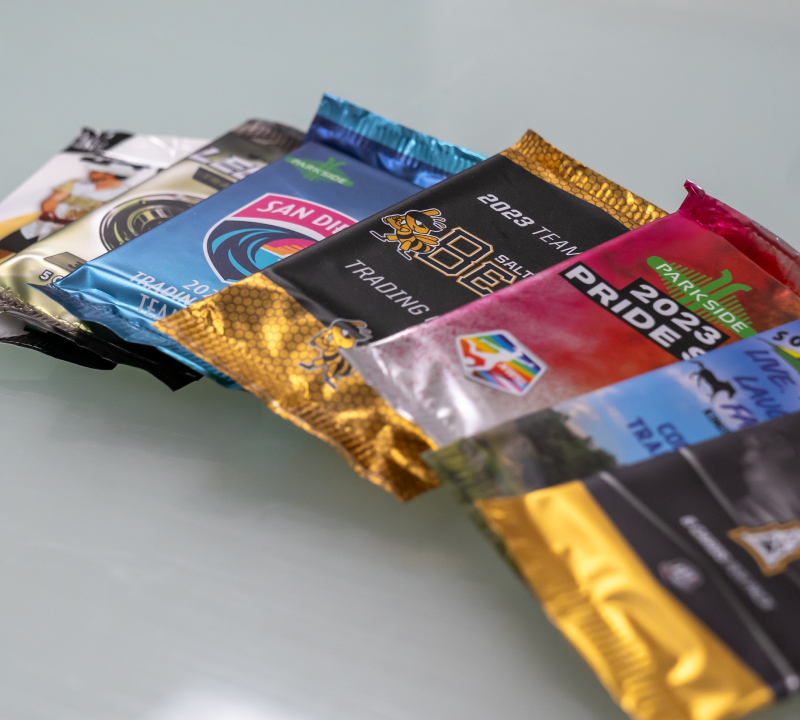
  • Sealed card packs
  • Retail boxes
  • Collector sets
  • Blind bags
  • Multi-pack products
  • Promotional kits

Packaging requirements should be considered early because the number of cards per pack, card thickness, wrapper type, box dimensions, and insertion requirements can all influence production.

Working with one partner across printing, finishing, collation, packaging, and assembly can also reduce the complexity of managing separate vendors for every stage.

Alcom’s collectible card capabilities extend beyond printing to include automated card collation, packaging, warehousing, and fulfillment, helping clients move from finished artwork to a completed product ready for distribution.

Know When It’s Time to Scale Production

Many independent trading card products start small.

Creators may design the cards themselves, order a limited print run, sort the cards manually, and assembly packs with a small team.

As the audience grows, however, that process can start consuming more time and resources than expected.

Signs that it may be time to consider a larger manufacturing partner include:

  • Print quantities continue to increase
  • Manual sorting and packing take too much time
  • Sets now include multiple parallels or inserts
  • Multiple vendors are needed to complete one product
  • Storage and fulfillment are becoming operational challenges

Scaling production does not mean giving up control of the creative product. The right production partner can help establish a repeatable process while maintaining the specifications and collector experience that define the set.

Frequently Asked Questions

What should I consider before printing a trading card set?

Start with the finished product. Consider the total number of cards, set size, stock and finish, whether you’ll include parallels or inserts, cards per pack, packaging requirements, and how the finished product will be stored or fulfilled. Making these decisions early helps ensure the printing and production process can support the complete card program.

What type of paper or stock is best for trading cards?

The right stock depends on the look, feel and function you want from the finished card. Thickness, rigidity, texture, coating, and color reproduction can all affect the final product. Speciality cards and inserts may also use different stocks than the base set to create a more premium experience.

What is trading card collation?

Collation is the process of organizing different cards within a set and bringing them together in the correct quantities or configurations before packaging. Automated collation becomes especially useful when producing larger quantities, multiple parallels or inserts, or more complex pack configurations.

When should I move from manually packing trading cards to automated production?

There is no single quantity that applies to every project. It may be time to consider automated production when sorting and packing require significant manual labor, set configurations become more complicated, print quantities increase, maintaining consistency across packs and releases becomes difficult.